
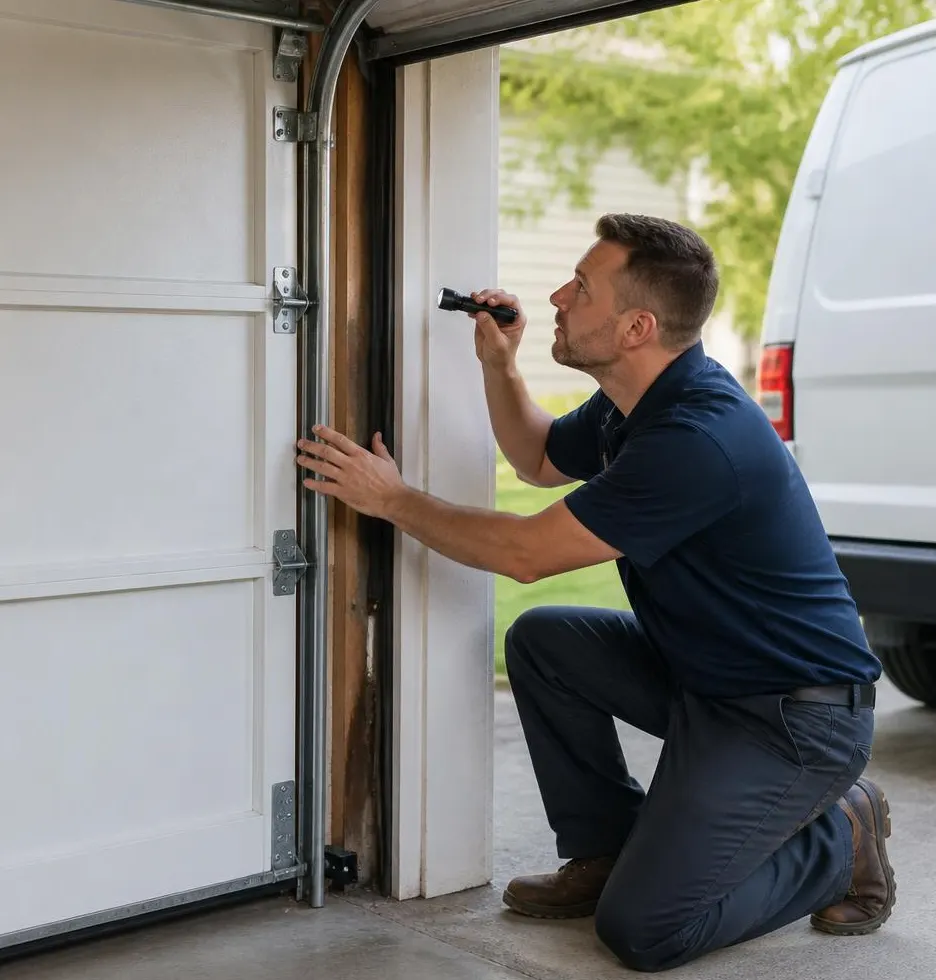
The Moment You Notice It
You're standing in the garage during the final walkthrough, keys to a new house almost in hand, and you reach up to test the door yourself. It drops the last foot faster than it should, or it groans on the way up, or you notice the bottom panel has a faint bubble under the paint. The inspector's report said "garage door operational" and moved on. But in this part of Florida, a garage door isn't a side note — it's the largest moving opening on the house, it takes the brunt of salt air and summer storms, and it's expensive to get wrong after closing. Here's what to actually check, and what it means if something fails.
Walk the Door Yourself Before You Sign
1. Run a hand along the bottom 18 inches of every panel
This is where rust starts first, especially on homes near the coast where salt air accelerates corrosion. Feel for soft spots, bubbling paint, or flaking metal. A little surface rust is cosmetic; pitting or a panel that flexes under light pressure means water has been sitting against it, likely from a worn bottom seal, and the panel may need replacing sooner than you'd like.
2. Check the bottom seal and weatherstripping
Kneel down and look at the rubber gasket along the floor. If it's cracked, flattened, or gapping in spots, afternoon downpours and wind-driven rain will push water and debris right under the door. This is a cheap fix on its own, but it's also a clue — ask how long it's been like that, because standing water against the bottom panel is usually what causes the rust in step one.
3. Look for reinforcement struts on the inside of the door
Flip on the garage light and look at the horizontal bars braced across the inside of each panel, usually near the top and middle. These struts matter for wind-load resistance during hurricane season. If they're missing, bent, or clearly an afterthought bolted on crooked, the door may not meet the wind resistance a storm can throw at it. This is one of the most commonly skipped items because it's not something you'd notice unless you're looking up at the door from directly underneath.
4. Check the springs, not just whether the door moves
Torsion springs sit on a bar above the door; extension springs run along the upper tracks. Look for visible rust, gaps between coils, or a spring that looks mismatched in size or color from its pair. Springs have a lifespan measured in cycles, not years, so a door that's been used heavily will show wear faster. A rusted or clearly aging spring isn't a dealbreaker, but it's a near-term cost you should know about before you negotiate.
5. Test the balance with the opener disconnected
Pull the manual release cord so the opener is no longer doing the work, then lift the door halfway by hand. It should stay roughly in place. If it crashes down or shoots up, the springs are out of balance, which puts extra strain on the opener motor and will shorten its life. Most inspectors never do this because it takes the door out of commission for a moment, but it's one of the clearest signs of upcoming spring work.
6. Check the rollers and tracks for rust and alignment
Humidity here is hard on metal rollers and track brackets. Look for rust streaks on the tracks, and watch the rollers as the door moves — they should glide smoothly, not catch or wobble. Misaligned tracks cause uneven wear on the door panels and can eventually let the door jump the track entirely.
7. Test the auto-reverse safety feature
Place a 2x4 flat on the ground where the door would close, and run the door down onto it. It should reverse immediately on contact. If it doesn't, or if the photo-eye sensors near the floor are visibly out of alignment or covered in grime, that's a safety issue that needs attention before anyone, especially kids or pets, uses that garage.
8. Ask about the opener's age and battery backup
An opener without battery backup means you lose garage access during a storm-related power outage, which in this area isn't rare during hurricane season. It's not a deal-breaker, but it's worth factoring into your post-closing to-do list.
When to Call Cantonment Garage Door
If you walk through this list and find rusted springs, a door that's out of balance, or missing wind-load bracing, that's exactly the kind of thing worth getting ahead of before move-in rather than after the first big storm. Cantonment Garage Door handles spring replacement and full garage door installation for homes throughout Cantonment, Pensacola, Ensley, Gonzalez, Molino, McDavid, Bellview, and Ferry Pass, and we can walk the door with you, explain what's wear-and-tear versus what's a real safety concern, and give you a straight answer on what it'll take to bring it up to shape for coastal weather.
If you're closing on a home in the Cantonment area and want a second set of eyes on the garage door before you move your car in for good, give Cantonment Garage Door a call. We show up when we say we will.